For decades, the backbone of UK business administration was the “Data Entry Clerk.” It was a role defined by patience, repetition, and a high tolerance for boredom.
But as we move deeper into the era of Making Tax Digital (MTD), the “Shoebox Method” is no longer just an inefficiency – it is a significant business risk.
The difference between manual entry and automation is not just a matter of “speed.” It is a fundamental shift in how financial data is captured, verified, and utilised.
While manual entry relies on human cognitive endurance, automation leverages an accounting assistant to provide real-time, high-accuracy financial intelligence.
In this comparison, we break down the real difference across four critical pillars: cognitive load, financial ROI, compliance, and the “Assistant” paradigm.
Why the Human Brain is Not Built for Data Entry?
The most significant, yet most overlooked, difference between manual entry and automation is the “Human Error Rate.”
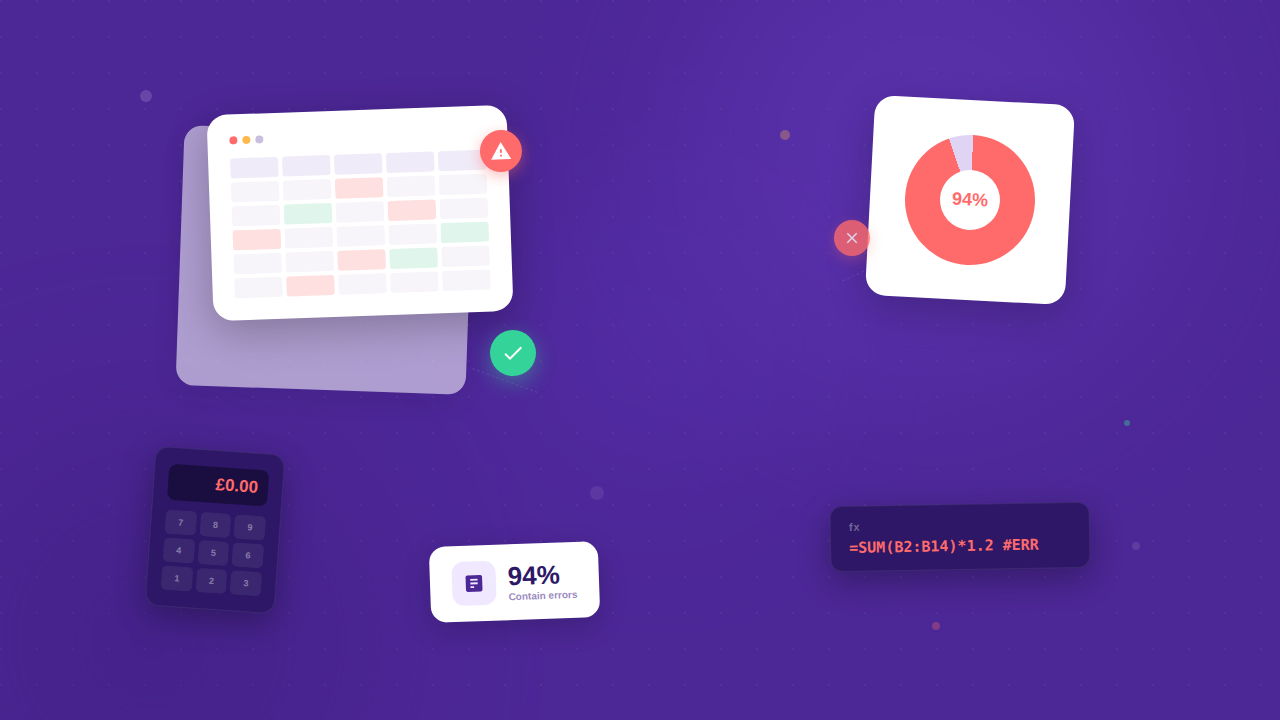
Research consistently shows that when humans perform repetitive, low-engagement tasks (like typing 100 invoice totals into a spreadsheet), the accuracy rate rarely exceeds 95% to 98%.
While that might sound high, it means that for every 1,000 entries, a human will likely make 20 to 50 mistakes.
In contrast, automated bookkeeping assistants like EazyCapture boast an accuracy rate of 99.9% or higher. A human clerk is susceptible to “Fatigue Bias”; as the afternoon progresses, the likelihood of mistyping a “0” for an “8” or swapping two digits in a VAT total increases exponentially.
These “avoidable mistakes” are the primary reason HMRC reports a staggering £9 billion tax gap caused by simple errors and failure to take reasonable care in record-keeping.
When you use a bookkeeping assistant, you aren’t just “scanning” a document. You are employing an intelligence that doesn’t get tired. EazyCapture’s assistant-led model doesn’t just read the text; it performs logical validation. It checks if the Net amount plus the VAT amount equals the Total. If the math doesn’t add up, the assistant flags it for a query. A human, operating under time pressure, is far more likely to simply type the “Total” and ignore the discrepancy, leading to reconciliation nightmares at year-end.
The Financial Reality: Examining the Cost-Reduction Curve
If you are still using manual entry, you are paying a premium for a lower-quality result. To understand the “Real Difference,” we must look at the Total Cost of Ownership (TCO) for a single transaction.
Current UK data suggests that the “all-in” cost of a manual data entry employee is approximately £56,890 annually (including salary, NI, pension, and overheads).
When you break this down to the document level, processing a single invoice manually costs a business roughly £8.00 when you factor in the time spent opening the email, downloading the file, typing the data, and fixing inevitable errors.
Automation flips this equation on its head. For the same 100,000 documents, an AI-powered assistant can process the data for approximately £170 (which is a cost reduction of nearly 98%).
Manual vs. Automated: A Financial Comparison
Aspect | Manual Entry (Human) | Automated Assistant (EazyCapture) |
Average Cost per Invoice | £8.00 – £15.00 | £0.10 – £0.30 |
Processing Speed | 15 – 20 minutes | 30 – 60 seconds |
Accuracy Rate | 95% – 98% | 99.9%+ |
Scalability | Hire more staff (Expensive) | Unlimited (Included in subscription) |
HMRC Audit Trail | Often missing physical links | Full digital link to original image |
The financial difference is even more stark when you consider “Late Payment Fees” and “Missed VAT Reclaims.”
Manual systems are inherently slow; an invoice might sit in an inbox for weeks before being entered.
An automated bookkeeping assistant like EazyCapture captures the data the moment it arrives. This allows businesses to take advantage of Early Payment Discounts (often 2-3%) and ensures that every single penny of deductible VAT is recorded. For a VAT-registered UK business with £500,000 in annual expenses, even a 1% improvement in VAT capture accuracy results in £5,000 of pure profit back into the business.
Understanding the Compliance Between Manual Entry & Automation
The most urgent difference between manual and automated entry is Legal Compliance. With the rollout of Making Tax Digital for Income Tax Self Assessment (MTD ITSA) in April 2026, the era of “typing it in later” is ending. HMRC now requires a “Digital Link” between the original transaction and the tax return.
- Under MTD rules, a “Digital Link” is an electronic transfer of data between software programs.
- If you are manually re-typing data from a PDF into Excel, and then from Excel into your tax software, you are breaking the digital link.
- HMRC’s goal is to eliminate the “human middleman” because that is where the errors occur.
Automation is built for this world. When you use EazyCapture, the assistant creates a digital record that stays linked to the original image of the invoice or receipt.
When this data is published to a ledger like Xero or QuickBooks, the digital chain remains unbroken.
Moreover, the quarterly reporting requirement of MTD for landlords and sole traders (with income over £50,000 starting in 2026) makes manual entry physically impossible for many.
If you have a large property portfolio, the volume of data entry required every three months will be overwhelming.
A bookkeeping assistant handles the “quarterly marathon” in real-time. By the time the deadline arrives, your records are already complete.
The Change EazyCapture Introduced
The final, and most critical, difference is the shift from “Tools” to “Assistants.” Traditional automation was a “Dumb Machine.” You fed it a perfect PDF, and it gave you back some text.
If the PDF was a bit blurry or if it was a multi-page document with complex line items, the machine failed.
EazyCapture represents the evolution of this technology into a Bookkeeping and Accounting Assistant. The difference is intelligence and context.
An assistant doesn’t just “see” the data; it interprets it for the UK market. For example:
- Prepayment Detection: If you pay an annual insurance bill of £1,200, a manual entry clerk will likely record it as a £1,200 expense in Month 1. This distorts your profit and loss. An automated assistant like EazyCapture identifies it as a prepayment and flags it so your accountant can spread the cost over 12 months.
- Asset Classification: If you buy a new piece of plant machinery or a high-end laptop, it shouldn’t be hidden in “General Expenses.” EazyCapture’s assistant logic recognises high-value items and suggests they be categorised as Fixed Assets, ensuring you get the correct Capital Allowances.
- Handwritten Context: UK landlords and small business owners often write notes on receipts – “Paid Cash,” “50% Personal Use,” or “Property A.” Standard OCR tools ignore these. EazyCapture’s assistant is trained to detect and extract these notes, preserving the human context that is vital for accurate tax filings.
By moving to EazyCapture, you are moving beyond “Software” and hiring a digital assistant that has been trained by UK accounting practitioners (FCCA/FMAAT).
This assistant handles the complexity of the UK tax system, handles the messiness of physical paper, and ensures your records are professional, accurate, and ready for your accountant.
The Bottom Line
The “Real Difference” between manual entry and automation is a choice between the past and the future.
Manual entry is a legacy process that is slow, expensive, and legally risky. Automation, specifically an assistant-led model, is a strategic asset that provides accuracy, scalability, and peace of mind.
Join the thousands of UK businesses and accountants who have made the switch to the world’s most intelligent bookkeeping assistant.
And what better way than EazyCapture to make your transition effortless?