Artificial Intelligence is quickly transforming into a standard operating practice for most accountants.
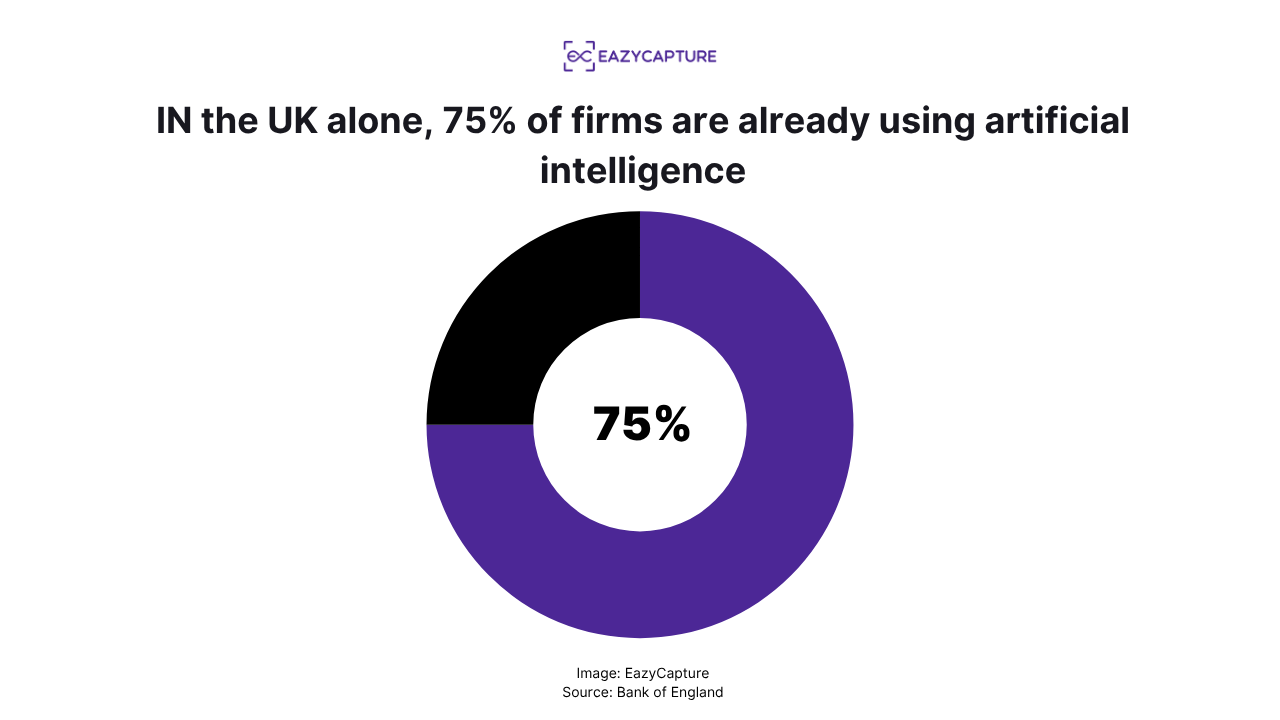
IN the UK alone, 75% of firms are already using artificial intelligence (AI), with a further 10% planning to use AI over the next three years.
Accounting has always relied on people to sift through piles of numbers, receipts, and invoices. AI is changing that dynamic by very accurately taking over the repetitive parts of the job and automating them for your business.
Instead of hours spent entering data, reconciling transactions, or chasing missing details, accountants can now let AI accounting software handle much of that groundwork and spend their time on review and advice.
Let’s talk about this in detail.
Key Takeaways
- Top business AI uses: data entry (69%), fraud detection (51%), real-time insights (47%). Time savings and risk detection are the clearest wins.
- 98% business owners have used AI internally for firm operations. AI is not only for clients, it’s transforming back-office tasks too.
- Top internal AI uses: portfolio management (65%), client comms (54%), invoicing/payments (53%). Routine admin is increasingly automated.
- Top GenAI time-savers: drafting docs (32%), data analysis (28%), brainstorming ideas (19%), summarising long texts (18%). These align directly with busy season tasks, giving 2025 adopters practical relief. Source
Why AI Matters in Accounting Today?
Most accountants spend a significant share of their time on routine tasks.
Invoice entry, reconciliations, approval routing, and chasing missing documents can eat into hours that could otherwise go toward analysis, client service, or advisory work.
The volume of financial data is also growing, driven by digital receipts, online payments, and new regulatory requirements.
At the same time, client expectations have shifted.
- Business owners want faster reporting, real-time visibility of their cash flow, and fewer surprises at year-end.
- Firms are under pressure to deliver more, without increasing headcount.
And AI is entering at the right moment: it offers accountants a way to reduce low-value admin and keep pace with client and regulator demands.
The Core Benefits of AI For Accountants
1. Time saved on routine data entry and coding
Most firms still spend a surprising amount of time rekeying invoice and receipt data.
AI reduces that by reading documents, extracting headers and line items, and proposing the likely nominal and VAT codes based on your rules.
The win is not only speed but fewer back-and-forth queries to fix missing fields.
This time saving is especially impactful for practices handling high volumes of small business clients, where each client may generate dozens of invoices per week.
2. Fewer errors from manual rekeying
Even multiple-member teams encounter minor mistakes when typing.
Published ranges for manual data entry error rates often sit around one percent, with studies citing bands between roughly 0.55 percent and 4.0 percent depending on context.
That sounds small until you multiply it by the monthly document volume.
AI fixes that, permanently.
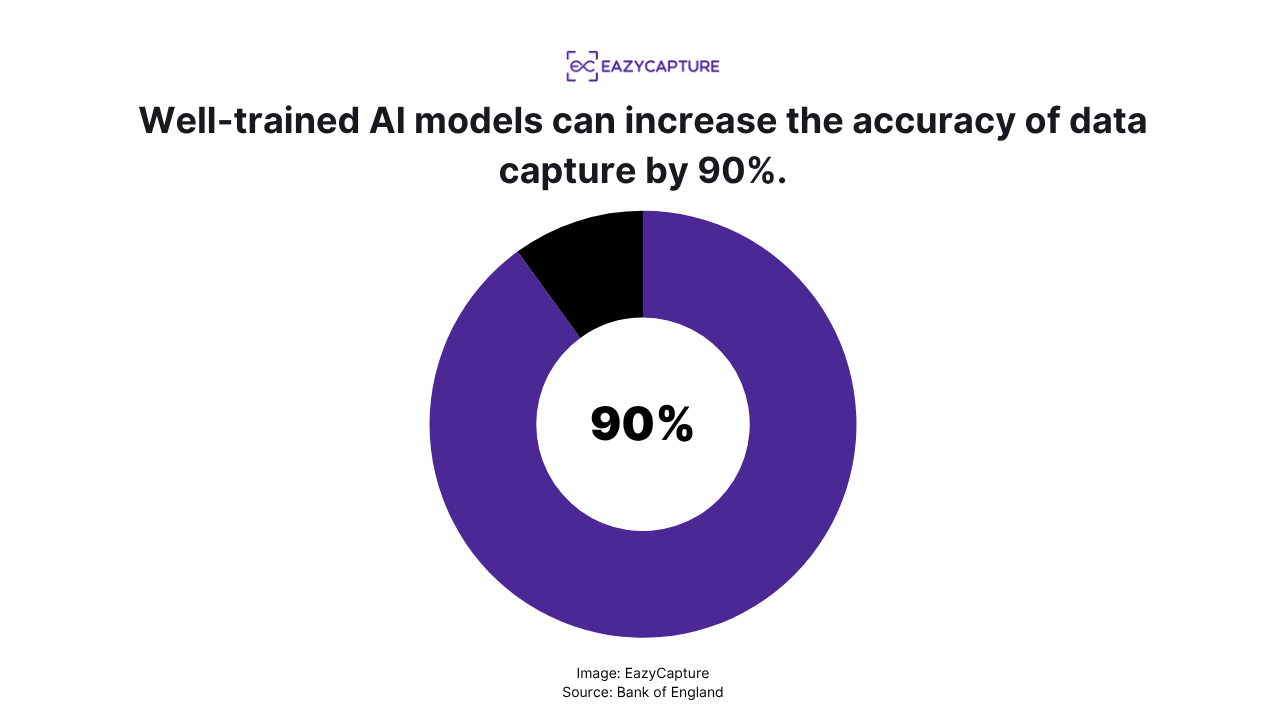
With well-trained models, the accuracy of field capture can exceed 90%, and errors are flagged before they reach the ledger.
Accountants can then focus their checks on exceptions rather than retyping every line.
3. Faster month-end and cleaner audit trails
Month-end and year-end closes are some of the most stressful periods in accounting.
But when inputs arrive structured and coded, items move through approvals and into the ledger faster.
Automating data capture and reconciliation shortens cycle times and reduces bottlenecks.
Instead of waiting for missing entries to be typed in, AI delivers structured data that accountants can immediately review, adjust, and finalise.
This speeds up reporting and frees time for analysis.
4. Better visibility on cash and payables
Data visibility improves when the underlying data improves.
You can even integrate AI-enabled systems with banking feeds and payment platforms to enrich your company’s data in real time.
What this means for your business is that rather than waiting for reconciliations at the end of the week, accountants can see up-to-date payable and receivable positions.
This helps identify potential cash gaps earlier and gives clients a clearer picture of their finances.
Use Cases of AI in Everyday Accounting Workflows
1. Invoice & Receipt Capture
One of the easiest and most effective places to start with AI is invoice and receipt capture.
Instead of retyping details into accounting software, AI systems can read invoices, whether they arrive as PDFs, scanned images, or even mobile phone photos. AI accounting software like EazyCapture can easily do this for you.
Our pre-bookkeeping tool will extract the supplier name, invoice number, dates, line items, VAT rates, and totals with a high level of accuracy.
Accountants then only need to review and approve, rather than spending time on manual entry. This speeds up processing, reduces errors, and creates a consistent digital trail that is ready for posting to the ledger.
2. Bank Reconciliation
Reconciling payments against invoices is a task every accountant knows too well.
It is repetitive, necessary, and often time-consuming when done line by line. AI-powered reconciliation tools make use of open banking feeds to suggest or automatically match transactions to invoices.
Instead of searching manually through long bank statements, accountants receive a pre-matched list they can confirm or adjust. This shrinks reconciliation work from hours to minutes.
The result is not just efficiency but also cleaner books, as mismatches are flagged immediately. Firms gain faster insight into cash positions, and clients benefit from real-time reporting accuracy.
3. Forecasting & Alerts
With structured financial data flowing in automatically, firms can use AI for forward-looking insights.
AI systems can project cash flow by analysing payment patterns, expenses, and seasonal trends.
They can also generate alerts when something looks unusual – for example, a client who consistently pays late, a supplier invoice that is out of the normal range, or cash outflows trending higher than expected.
Instead of discovering issues after the fact, accountants are notified early and can act quickly.
This shifts the role from reactive reporting to proactive advice, helping clients manage risks and plan more confidently.
4. Approval Routing
Approval workflows are another area where AI brings practical (and very tangible) benefits.
Instead of chasing signatures or relying on emails that get lost, AI tools automatically route invoices based on rules.
For example, invoices over £2,000 can go directly to a partner, while regular supplier bills might be auto-approved within limits.
By enforcing consistent rules and making exceptions visible, AI reduces bottlenecks, prevents fraud, and ensures the right people review the right documents without adding layers of unnecessary administration.
How To Choose The Right AI Tool?
1. Seek Accuracy
Accuracy is non-negotiable.
Data capture should consistently reach at least 90–95 percent for invoices and receipts.
If accuracy falls below this, staff spend more time correcting mistakes than the system saves.
Always test accuracy with your own client documents before committing. Some tools perform well with structured invoices but struggle with messy receipts, so trialling on your actual workload is essential.
Accuracy builds trust, and without it, adoption will stall.
2. Easy Integration
A good AI tool should plug directly into your core systems, such as Xero or QuickBooks, without clunky workarounds.
Smooth integration means invoices captured by AI appear in the ledger with the correct codes, supplier details, and attachments intact.
Without integration, staff will spend time exporting and reformatting files, erasing the time savings AI promises.
Integration also ensures your audit trail remains consistent across systems.
3. Security & Compliance
Handling financial data comes with responsibilities.
Any AI system must meet GDPR requirements, encrypt data both in transit and at rest, and offer clear information on data residency.
Firms should know exactly where client documents are stored and how long they are retained.
Without strong compliance, AI adoption risks breaching client trust and regulatory obligations. Security should be one of the first questions you ask any vendor.
4. Transparency
Accountants need visibility into what the AI is doing. The system should allow you to review, override, and audit its outputs.
Black-box systems that post directly without explanation can create compliance risks and erode trust.
Transparency also helps staff learn where the AI excels and where it struggles.
Audit trails showing who approved or edited each item ensure accountability remains clear.
5. Scalability
As your firm grows, so will transaction volumes.
The AI tool must cope with increasing client loads without slowing down or raising costs disproportionately.
Scalability also means flexibility – the ability to expand into new workflows, handle different document types, and support multiple users.
Choosing a scalable tool ensures that the investment holds value not only today but also as the practice evolves.
Where EazyCapture Fits?
Most firms begin their AI journey by targeting the repetitive tasks that eat up time and leave little room for judgement.
That’s exactly where EazyCapture comes in.
EazyCapture is your pre-bookkeeping assistant. It handles:
- Your prepayment detection
- The intake of your invoices and receipts
- Extracting data with high accuracy
- Checking VAT and MTD details
- And, of course, pushing everything neatly into your current accounting tools.
This means accountants spend less time on manual entry and more time reviewing exceptions or advising clients.
Because it plugs into systems you already use, EazyCapture is a low-risk first step into AI – practical, measurable, and easy to scale.
Making Accounting Automation Easier With EazyCapture
AI in accounting isn’t about replacing people.
It’s about making your standard practices more efficient and cutting out the workflows that slow practices down.
By automating capture, validation, and reconciliation, firms save hours, reduce errors, and deliver cleaner data to clients.
Tools like EazyCapture make this shift easy, sitting neatly in front of your existing systems and reducing effort from day one.
👉 If you’re ready to see how AI can free your team from routine bookkeeping tasks, start a pilot with EazyCapture today and measure the difference for yourself.
Try EazyCapture now!