The word “efficiency” matters a lot in the finance department of your company.
If your accounts payable process still involves a human being opening an email, downloading a PDF, and manually typing a supplier’s VAT number into a ledger, your business is operating with a significant structural disadvantage.
Automated invoice processing is the transition from manual, error-prone data entry to a streamlined, digital workflow where a bookkeeping and accounting assistant handles the heavy lifting.
This isn’t just about “scanning”, it’s about a system that understands the financial logic of an invoice.
In this guide, we will break down the implementation journey, the real-world costs, and the strategic advantages of making the switch.
The Implementation Roadmap: Step-by-Step
Implementing automated invoice processing is not an overnight task, but with a bookkeeping assistant like EazyCapture, it is a structured and manageable journey.
1. The first phase is Data Centralisation.
You must move away from “scattered” invoices. This means setting up a dedicated email “inbox” provided by your assistant where all digital invoices are automatically forwarded.
Physical receipts, on the other hand, should be captured at the point of purchase using a mobile app to ensure no “thermal fade” or loss occurs.
2. The second phase is Workflow Mapping.
This is where your assistant truly shines. You define the “rules” of your business. For example, you can tell your assistant that any invoice from “British Gas” should always be categorised as “Utilities” and flagged for “VAT at 5%.”
This “teaching” phase is short because modern assistants like EazyCapture learn from your previous actions.
3. Once the rules are set, the system moves into the Validation Phase, where a human eyes-on check is performed for the first few weeks to ensure the data is being mapped correctly.
4. Finally, you move to Full Synchronisation, where your assistant “publishes” data directly into Xero, QuickBooks, or Sage with zero human intervention.
The Real Cost of Automation vs. Manual Entry
When discussing cost, businesses often make the mistake of looking only at the “subscription price.” To understand the true cost, you must perform a Total Cost of Ownership (TCO) analysis.
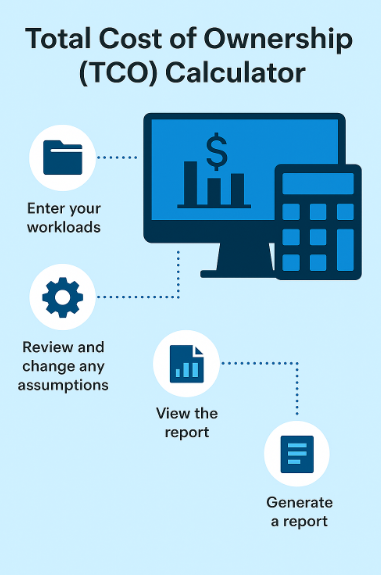
Manual entry in the UK is expensive. A junior accounts clerk or bookkeeper costs between £15 and £22 per hour.
If they spend 20 hours a week on manual entry, you are spending over £15,000 a year just on the act of typing. This doesn’t account for the “Error Cost” – the time spent fixing mistakes, chasing missing VAT numbers, or dealing with duplicate payments.
In contrast, a professional bookkeeping assistant like EazyCapture costs a fraction of a salary.
Most firms see a Return on Investment (ROI) within the first 30 days.
The cost of automation is essentially “self-funding” because the time saved by your senior staff allows them to focus on high-value tasks like tax planning, cash flow forecasting, and business strategy.
Solving the "Messy Data" Challenge
One of the biggest hurdles in implementation is “Messy Data” – crumpled receipts, handwritten notes, and multi-page contractor bills.
Generic automation tools often break when faced with these realities. This is why a specialised accounting assistant is superior. EazyCapture is designed to handle the “real world.”
It can detect handwritten notes such as “Paid in Cash” or “For Property B,” which are vital for accurate bookkeeping but usually ignored by basic OCR.
Furthermore, EazyCapture excels at Prepayment and Asset Detection.
Most automation tools treat every bill as a simple “expense.”
EazyCapture recognises that a £5,000 invoice for “Insurance” should be flagged as a prepayment, and a £2,000 invoice for a “MacBook” should be treated as a Fixed Asset.
Implementing a tool that misses these nuances actually creates more work for the accountant at year-end.
By choosing an assistant that understands UK accounting logic from day one, you ensure that your “automated” process doesn’t just create a digital version of a messy physical system, but actually improves the quality of your financial reporting.
Security, Compliance, and HMRC Standards
In the UK, security and compliance are non-negotiable, especially under the Making Tax Digital (MTD) framework.
When you implement automated processing, you are creating a “Digital Audit Trail.” HMRC increasingly demands that records be stored digitally and be easily retrievable.
A professional assistant like EazyCapture ensures that every single transaction is linked to a high-resolution image of the original document, which is stored securely in the cloud.
Security also extends to Fraud Prevention.
Manual processing is a major gateway for “Invoice Fraud,” where fake invoices are slipped into a pile and paid without question. An automated assistant performs “Duplicate Detection” and “Supplier Verification” instantly.
It checks if an invoice has been seen before or if the bank details have changed, alerting you to potential fraud before the money leaves your account.
Scaling Your Practice with an Automated Assistant
For accounting practices, the implementation of EazyCapture isn’t just about efficiency; it’s about Scalability. Traditional firms are limited by their “headcount.”
To take on ten more clients, you usually need to hire another bookkeeper. This “linear growth” is slow and expensive. However, with an automated bookkeeping assistant, your growth becomes “exponential.”
Your existing team can manage five times the number of clients because the “grunt work” of data extraction and categorisation is handled by EazyCapture.
- The implementation of an assistant allows your firm to shift its value proposition.
- Instead of selling “data entry,” you are now selling “real-time financial insights.”
- Because the invoices are processed as they come in, you can offer your clients monthly or even weekly reporting.
This justifies higher fees and creates a stickier relationship with your clients. Implementation is the first step toward becoming a truly “modern” firm that is ready for the future of finance.
Conclusion
By transitioning from a manual system to an assistant-led workflow, you are eliminating the most tedious, error-prone, and expensive part of your business operations.
Implementation is about more than just software; it’s about a commitment to accuracy, security, and growth.
Whether you are a small business owner looking to reclaim your weekends or an accounting partner looking to scale your firm, an automated assistant is the most powerful employee you will ever “hire.”